
7. SOME AND MISINFORMATION IN UROLOGY
Misinformation in SoMe is common in the field of urology. In this chapter, we will discuss the main strategies in combating misinformation on SoMe (Figure 3).
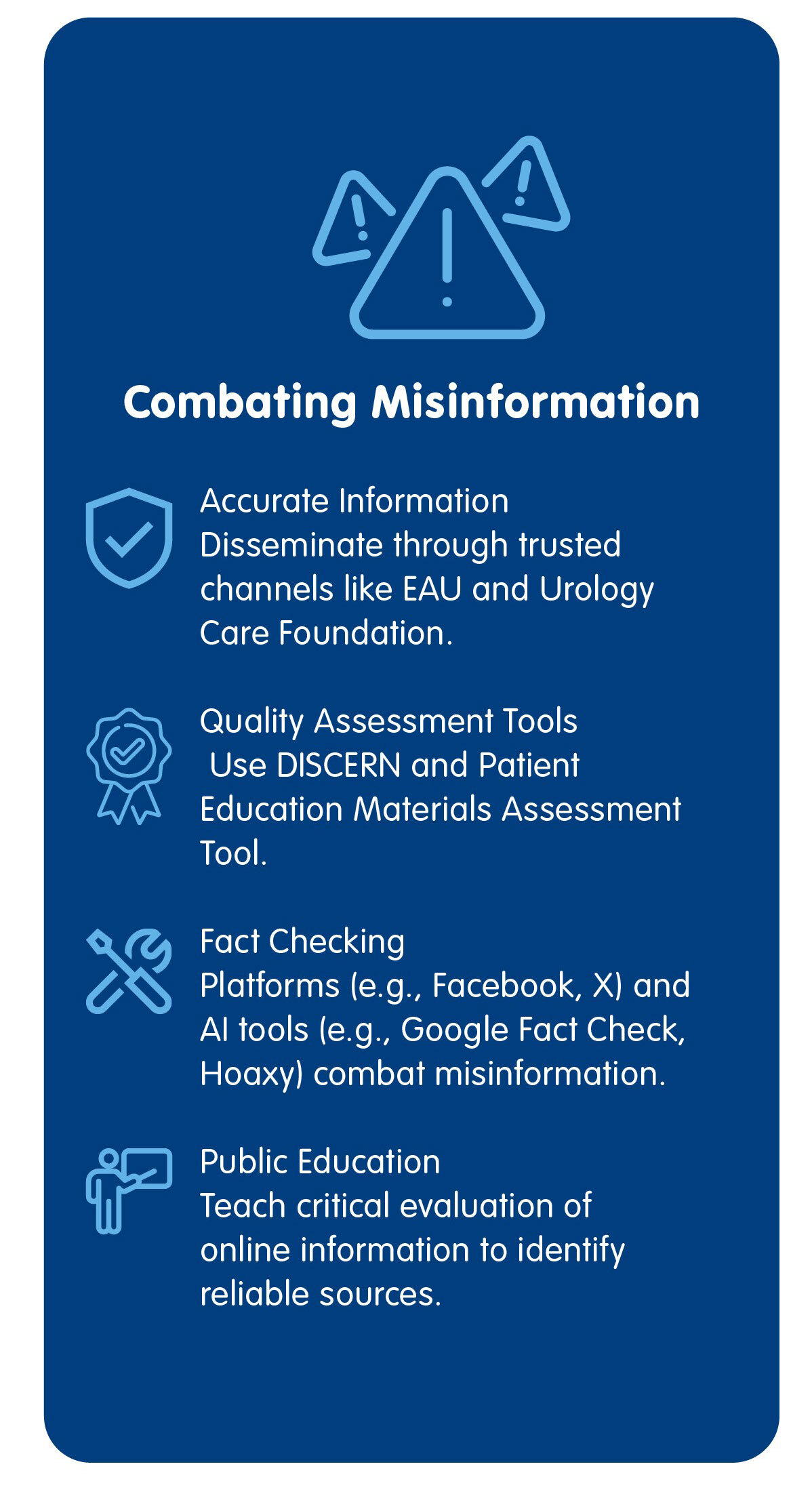
Figure 3: Main strategies to combat misinformation on SoMe
7.1. Assessing quality of information in SoMe
With SoMe influencing all spheres of medicine for both healthcare providers and receivers alike, it is essential to curtail misinformation, avoid misleading fake news and identify red herrings that could be harmful to online seekers of information and in general for medical practice. Online opinion can mislead the consumer especially when they are not confident and well informed, can sway their decisions and can potentially have a negative impact on their treatment [151]. While information is readily disseminated on SoMe platforms, it is unregulated. There are concerns regarding the quality of health-related information as online sources may not follow scientific guidelines for publication. This is the core issue that defines the problem of misinformation, which leads to the spread of falsified and unverified opinions on SoMe.
Independent assessment by expert health professionals related to the field is the most accurate way to point out the deficiencies and misinformation provided [152]. A frequently used method to assess patient education information is by grading the quality of content, and the two commonly tools include the DISCERN scoring system [152, 153] and the Patient Education Materials Assessment tool (PEMAT) [154]. The DISCERN instrument consists of fifteen questions plus an overall quality rating, which allows users to judge the quality of written consumer health information [152, 153]. The PEMAT allows the user to assess the understandability and actionability of printable and audiovisual patient education materials [154]. Utility of such tools has been shown to demonstrate strong internal consistency, reliability and evidence of construct validity and is a proven methodology that can be implemented as a means of ascertaining the quality of information that is disseminated by relevant authorities.
7.2. Current status of misinformation in urology
A study by Alsyouf et al. evaluated the deleterious effects of propagation of “fake news’ in urology [155]. The authors reviewed a total of 50 articles and compared the information provided in the articles to available scientific research and consensus data. They noted that the prevalence of inaccurate or misleading articles was high: prostate cancer, 7/10 articles; kidney, 3/10 articles; bladder, 2/10 articles; testis, 2/10 articles; and PSA testing, 1/10 articles. The average number of shares was significantly higher for inaccurate (54,000 shares; P < 0.01) and misleading articles (7,040 shares; P < 0.01) than for accurate articles (1,900 shares). Inaccurate articles were 28 times more likely to be shared than factual articles [155].
Tanwar et al. [156] assessed the quality of information available to patients and medical professionals on YouTube with regards to benign prostatic hyperplasia (BPH), a common urological condition. They reported that 63% of the videos were irrelevant to the search, projected wrong facts or provided very basic information about the prostate and the disease. A negative correlation was observed between the quality of videos and their ranking on the search.
Serinken et al. [157] analysed 600 videos on YouTube, of which 32.8% were created by academicians and physicians. The videos contained minimal amounts of misinformation when they were made according to EAU guidelines. Conversely, such videos were often prepared unprofessionally, mostly containing images of live surgery or interventions and generally medical jargon not comprehensible by the lay person. Therefore, these videos have limited usefulness with less viewership. Despite being highly scientific, if viewership is limited, the purpose of dissemination of reliable information will be restricted.
A quality review of 100 videos on the surgical treatment of urinary stones available on YouTube was performed using the DISCERN questionnaire [158]. The study revealed that only 26 videos (26%) were rated to contain no misinformation and only nine disclosed potential conflicts of interest. Videos uploaded by healthcare professionals and medical societies/organisations offered significantly higher levels of quality. The videos provided by the European Association of Urology achieved the highest rating with a median score of 3.0. This highlights the importance of active recommendation that professional bodies should only release evidence-based patient education materials.
In a study by Xu et al. [158], 65 videos with the hashtag #prostatecancer on TikTok were reviewed. The study showed that the median expert-rated quality of videos on prostate cancer was only 2/5 on DISCERN and the median scores on PEMAT were 75% for understandability and 0% for actionability. Only 15% were informational videos about screening, treatment and/or side effects.
Cañon et al. [159] proposed a semi-automatic moderation web service that may be useful in controlling the quality of videos published on their online Health Service Network (HSN) sites. A preliminary pilot evaluation in a simple use case demonstrated the relevance of videos retrieved using the moderation service, “The HealthTrust metric” [160], which calculates reputation in an online health community based on link analysis. Implementing the service to support the assessment of trustworthiness of videos in an online HSN which can be integrated into open-source Virtual Social Network Platforms improved both public trust in these types of HSNs and the relevance of the videos retrieved was higher compared to using the YouTube search engine alone.
7.3. Promoting reliable patient information in urology
It is important to understand the current dissemination of reliable information by urological societies and professional bodies. Ji et al. [162] assessed the quality of overactive bladder patient education material on YouTube using the Agency for Healthcare Research and Quality’s Patient Education Materials Assessment Tool (PEMAT) for video content created by scientific bodies. They concluded that the quality of patient education materials on YouTube varies significantly. Although the Urology Care Foundation videos were of high quality, they did not appear within the top 25 search results for overactive bladder. The researchers therefore urged dedicated organisations and authorities to focus resources on how they can increase their outreach to patients on platforms like YouTube. In a study by Selvi et al. [163], the authors investigated whether YouTube videos can be considered a reliable additional information source for urological recommendations during the COVID-19 period. Of the 136 videos assessed, the level of inter-rater agreement in terms of the usefulness assessment of videos was positive (kappa coefficient = 0.903), and 85.3% of all videos contained useful information on what should be done for urological disease during the COVID-19 period. This rate was especially higher in informative easy-to-understand videos uploaded by “universities/professional organisations/non-profit physicians/physician groups.”
The only way to counter misinformation is to achieve a trifecta of high-quality rating, standardisation and dissemination of evidence-based information by reliable authorities [18, 164]. The EAU has established the EAU Patient Information portal (https://patients.uroweb.org) for patients to access reliable information on various urological conditions. The Urology Care Foundation (https://www.urologyhealth.org), the Official Foundation of the American Urological Association (AUA), has also produced numerous patient-education materials based on the AUA Clinical Guidelines. By actively disseminating this to the public and patients in need of urological care, we can mitigate the detrimental effects of misinformation in urology.
Another key factor is identifying the correct platform for the dissemination of correct advice for maximum impact on the target audience. SoMe platforms differ by their users’ demographics and their styles of communication and interaction. The choice of SoMe platforms greatly depends on our target audience and the purpose of our SoMe activities. For example, Instagram may be an effective platform for raising awareness of testicular cancer in young men, whereas X may be a better platform for sharing experiences and exchanging medical knowledge among urologists [18]. Similarly, SoMe analytics can help us understand how we can reach our audience more effectively [165].
Mere scientific evaluation of content, putting effort into effectively disseminating information and quality control may be futile if its actual impact falls short of the desired end result, which is utilisation by the online patient. In fact, end users can reap several benefits from health seeking on SoMe, which include obtaining health information and gaining social and emotional support from peer-to-peer interactions [166]. These interactions and social and emotional support influence patients’ decision-making in positive and negative ways, and it is therefore essential that we mitigate the spread of misinformation. Perhaps the initial starting point could be the caregiver, who may actively recommend and point to the correct direction to seek internet content from evidence-based patient education materials [167]. As stated by Taylor et al. [168], as SoMe use increases in urology, maintaining a professional online identity and interacting appropriately with one’s network are vital to engage positively and protect patient health information, and hence it is time to have guidelines on how to prevent the spread of misinformation on SoMe platforms.
| Position statements |
| Beware of inaccurate and misleading posts that can typically yield a higher degree of engagement. It is important to recognise misinformation that is common across the field of urology. |
| Utilise the various instruments available to assess quality of information on SoMe to ensure the quality of SoMe posts is upheld. |
| Produce high-quality patient information in urology and identify accurate SoMe platforms and channels for dissemination of correct and reliable information to combat misinformation on SoMe. |